Quality & testing
What are polyphenols in olive oil?
Why fresh olive oil catches at the back of your throat.
10 October 2026 · 2 min read
Polyphenols are natural compounds found in the olive fruit that carry over into the oil during pressing. They are responsible for the bitterness and peppery bite of fresh extra virgin olive oil — and they are also part of why the oil keeps.
Two effects you can observe
The first is taste. The bitterness on the tongue and the pungency in the throat come directly from polyphenols. Professional tasting panels score both as positive attributes, not faults.
The second is stability. Polyphenols act as natural antioxidants within the oil itself, slowing the process that turns oil rancid. Oil high in polyphenols tends to last longer and withstand heat better.
Why the amount varies
- Olive variety — some are naturally far higher than others
- Harvest timing — fruit picked earlier, while still green, is usually higher in polyphenols
- Processing speed — pressing late means more is lost
- Heat — refining strips most polyphenols out, which is why "pure" oil tastes flat
- Age and storage — the level falls steadily over time
The trade-off with yield
Early-harvested olives contain more polyphenols but yield less oil. Fruit left to ripen fully gives more oil but fewer polyphenols and a milder taste. A producer has to choose, and that choice shows up in the numbers.
Olivko's figure
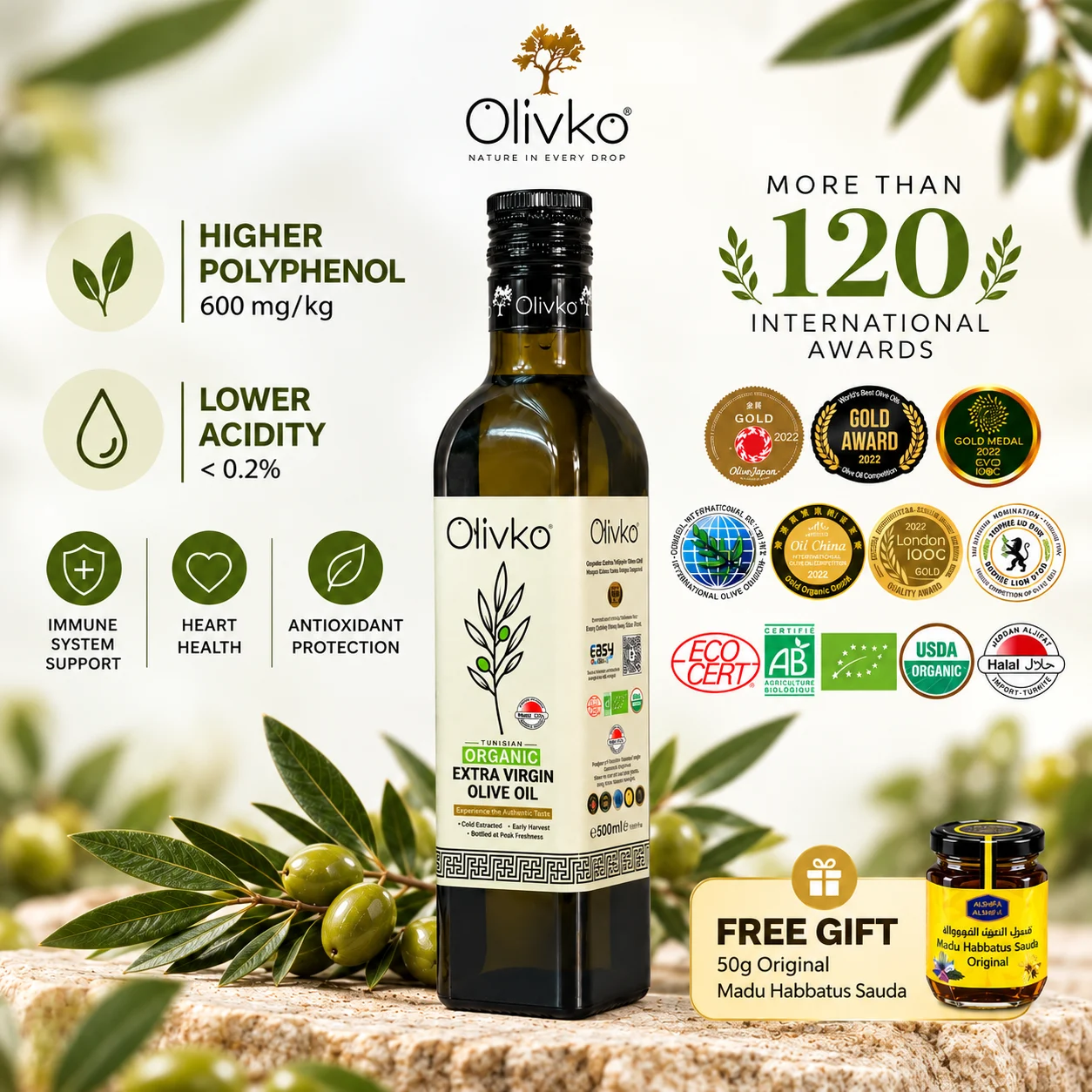
Olivko carries up to 600 mg/kg of polyphenols. The fruit is pressed within about three to four hours of harvest, which helps hold that level alongside its low acidity of 0.18%.
Judging polyphenols without a laboratory
You cannot measure polyphenols at home, but you can taste them. The two most obvious sensations come directly from these compounds.
- Bitterness at the back of the tongue, a few seconds after the oil is in your mouth
- A pungent catch at the back of the throat after swallowing, sometimes enough to make you cough
Oil that is soft, smooth and leaves nothing at the throat is almost certainly low in polyphenols — because it was refined, because the fruit was picked late, or because it has been in the bottle a long time.
Why the number falls after the bottle is opened
Polyphenols are consumed as they work. Every time the oil meets oxygen, light or heat, some of them are spent protecting the fats in the oil. That is their job.
That means the figure on a laboratory report describes the oil at the time it was tested, not permanently. A bottle kept cool and dark and finished within a few months retains far more of them than one standing half-empty beside the stove for a year.
Polyphenol content varies by harvest season. We make no health claims from this figure — it is a measure of quality, freshness and stability.